
Rudraksha Recommendation
Which mukhi your chart actually supports — and, just as honestly, which to avoid.
Reviewed by Dr. L. Nageshwwar Rao, PhD (Astrology), Consulting Astrologer · Last reviewed 2026-07-17 · How we compute this
Hand-reviewed PDF, delivered within 4-7 days of payment.
What your report looks like
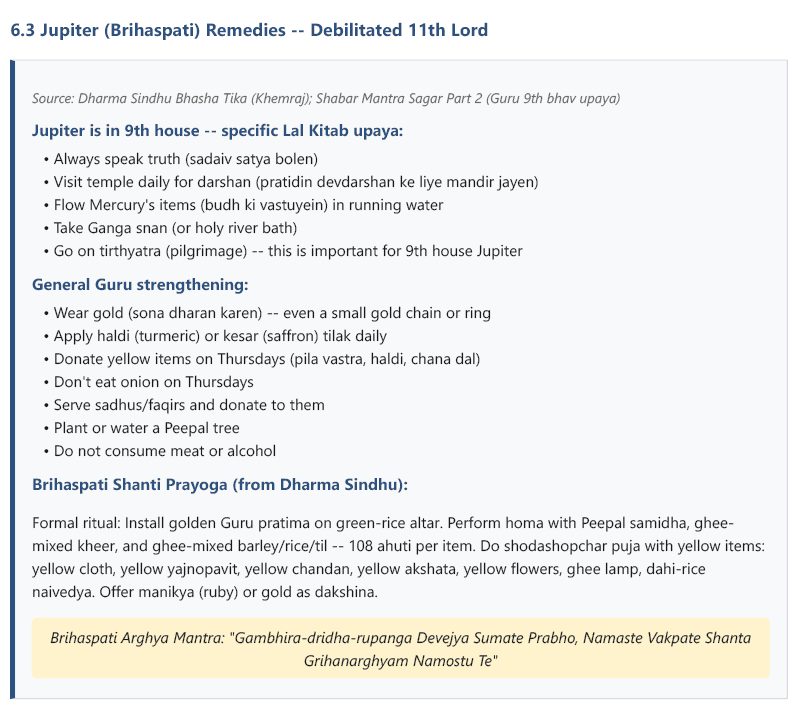
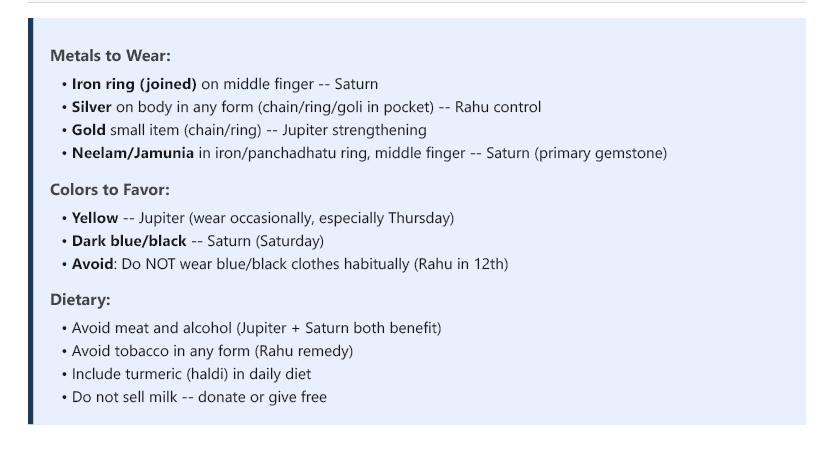
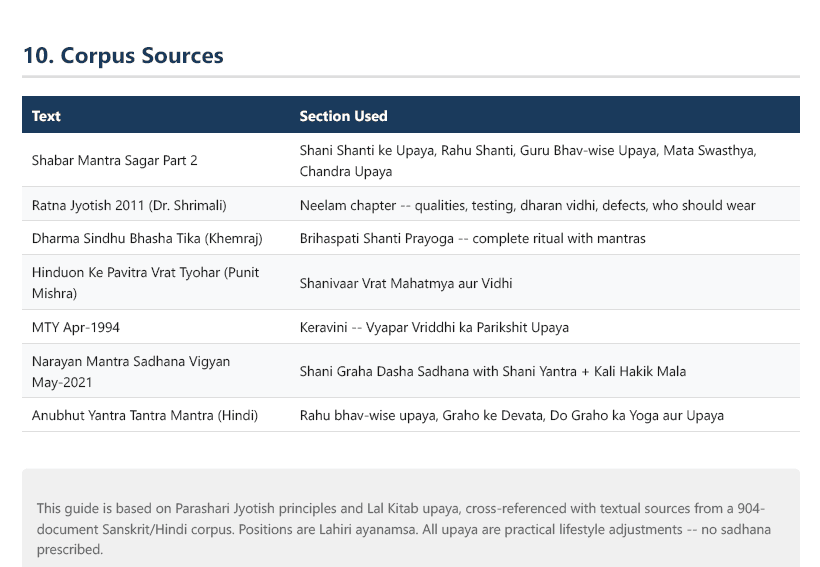
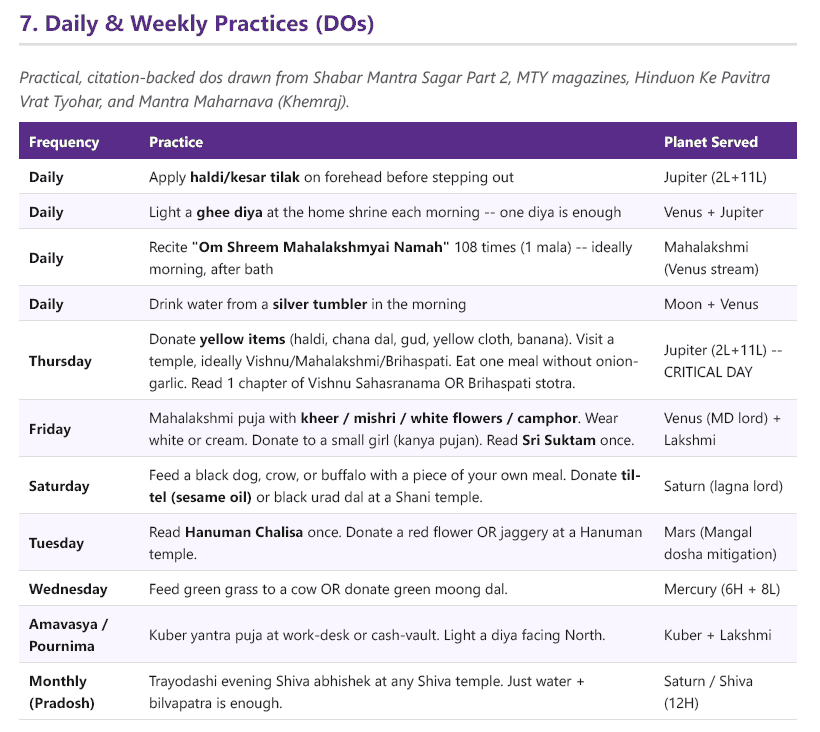
These are real sections from reports we have delivered — names and birth data redacted. Your report is written fresh from your own chart.
Drawn from the classical corpus
- बृहत्पाराशरहोराशास्त्रBrihat Parashara Hora Shastra — on grahas, bhavas & dashas
- फलदीपिकाPhaladeepika (Mantreswara) — on yogas & results
- सारावलीSaravali (Kalyana Varma) — on planetary effects
The reading
Rudraksha — the तीर्थ-bead of Shiva — is a gentle and traditionally accessible remedy, but "gentle" does not mean "wear anything." Each मुखी (face) is mapped in the tradition to a particular graha or deity, and a bead chosen for the wrong graha simply does little, while a few combinations are genuinely contraindicated for certain practices. This report maps the afflicted or weak grahas in your chart to the appropriate mukhi, names what each one strengthens and why, and is equally clear about what to avoid.
We read your chart for which grahas are weak by dignity or afflicted by malefics, which are functionally important for your lagna, and which are active in your current dasha — and only then recommend the mukhi(s) that support them. The classical mapping guides us (e.g. 1-mukhi for Sun/Shiva, 2-mukhi for Moon, 5-mukhi for Jupiter/general, 7-mukhi for Saturn/Lakshmi, 9-mukhi for Rahu/Durga), always read against your specific chart rather than applied generically.
We also state plainly that rudraksha is not for everyone or every practice. For certain Shakti upasanas, the tradition prescribes other malas (sphatik, coral, etc.) and treats rudraksha as unsuited; some grahas are best left un-amplified for a given lagna. Where that is the case for you, we say so. And we do not sell beads — the recommendation is independent, and we tell you exactly what to insist on so you can buy a genuine, lab-tested bead from a source you trust.
What you'll actually uncover
Read against the classics
- The mukhi (face) of a bead carries its planetary and deity association in the Puranic tradition — 1-mukhi for the Sun/Shiva, 2-mukhi for the Moon, 5-mukhi for Jupiter, and so on — so the bead is matched to the weak or afflicted graha your chart actually needs supported, not to a generic default. [Shiva Purana]
- This is a Puranic mala tradition rather than a jataka doctrine, and we say so honestly: the bead's virtue and the way it is worn and energized come from the Shiva Purana / Rudraksha-Jabala lineage, while the chart only tells us which graha to direct that support toward. [Shiva Purana]
- Where the tradition treats a bead as unsuited — for certain Shakti practices, or where a graha is better left un-amplified for your lagna — that contraindication is stated plainly, since the same source that prescribes a mukhi also marks its limits. [Shiva Purana]
What's included
Indicated mukhi(s) and the graha each strengthens
The specific मुखी (or small combination) suited to your chart, with the graha or deity each corresponds to and the precise reason it is recommended — which weakness or affliction it supports, and why now in terms of your dasha. If a combination such as Gauri-Shankar or a particular multi-bead is apt, it is explained here. Pair with Personalized Mantra Sadhana for the mantra the bead supports.
What to AVOID — honest contraindications
The candid half of the advice: any mukhi that would be pointless or counterproductive for you — tied to a functional malefic better left un-strengthened — and the explicit note that rudraksha is contraindicated for certain Shakti practices and for some grahas and people, where the tradition prefers sphatik, coral, or another mala. If rudraksha simply isn't the right remedy for your situation, we say that rather than recommend a bead anyway.
How to wear and energize
The traditional method: abhishek/cleansing (panchamrita or clean water), the activating mantra (commonly ॐ नमः शिवाय, or the bija associated with the bead's graha), the number of repetitions to energize it, and how to wear it respectfully — including keeping it clean, removing it appropriately, and re-energizing periodically.
Metal and thread
Whether to string the bead on red/black thread or set it in metal (silver/gold/panchadhatu) and why, based on the graha it serves — with practical notes on contact with skin, care, and what to avoid (e.g. wearing during impurity, sleeping/bathing as the tradition advises).
Day to begin
The auspicious day to first wear and energize the bead — the weekday tied to its graha/deity, suitable tithi/nakshatra where relevant, and the best time of day (often morning after snana), localised to your current city.
Two follow-up questions
After you receive the report, you may ask two follow-up questions by message or email, and we will answer them to clarify anything in your reading.
At a glance
Best suited for
- Anyone considering a rudraksha and wanting a chart-based "which mukhi, and should I" before buying
- People sold a bead who want to verify it actually fits their chart and practice
- Sadhakas building a practice who want to know if rudraksha suits their mantra (and when it doesn't)
- Those wanting clear wearing and energizing instructions done the traditional way
- Buyers who want to avoid fakes and know exactly what certification to demand
How it works
- You place the order and complete the intake; we note any bead or mala you already wear and your current practice.
- We assess weak/afflicted grahas, functional importance for your lagna, and dasha relevance.
- We select the indicated mukhi(s) — or conclude rudraksha isn't right for you — with wearing, energizing, metal/thread, and a start day, reviewed by hand against the texts.
- PDF delivered to your email within 4-7 days.
What we'll ask you
- What are you hoping the bead supports? (optional)
- Are you already wearing a rudraksha or any mala? (optional)
- Do you have an active mantra-sadhana or guru-mantra? (optional)
- Any skin sensitivity, lifestyle, or budget factors for metal/thread and bead count? (optional)
Frequently asked
- Isn't rudraksha safe for everyone, so why a reading?
- It's gentle, but a bead matched to the wrong graha does little, and for certain Shakti practices the tradition specifically prefers other malas. The reading ensures the mukhi actually serves your chart and practice — and tells you if it doesn't.
- How do I know the bead I buy is real?
- Demand a recognised lab/X-ray certificate confirming the mukhi count, and buy from a reputable seller. We tell you exactly what to ask for; we don't sell beads, so the advice is unbiased.
- Can I wear a 5-mukhi like everyone says?
- Often yes — 5-mukhi (Jupiter) is the most universal — but "everyone says" isn't a reading. We confirm whether it fits your chart and goal, and whether a different mukhi serves you better.
- What's not included?
- We do not sell rudraksha beads. This is an independent recommendation; buy a genuine, lab-tested bead from a reputable source you trust.
- We do not certify or grade individual beads; insist on a recognised lab/X-ray certificate confirming the mukhi count and authenticity from your seller.
- A rudraksha is one supportive upaya; it does not replace a full remedial program or, where relevant, guru guidance.
- Conclusions depend on birth-time accuracy, since functional relevance is lagna- and dasha-based.
Your data
- HTTPS in transit; passwords stored as one-way hashes; payment data never touches our servers.
- Payments are processed by Razorpay (India) and Stripe (international); card details never reach our servers.
- GST-compliant tax invoice emailed after payment.
Related readings
A registered business: DATCRAZY LLP · GSTIN 22AASFD4221E1ZU · 105, MM Silver Plaza, G.E. Road, Raipur, Chhattisgarh - 492001