
Ishta Devata Determination
The deity your own chart points you toward — read from the soul-significator, not chosen for you.
Reviewed by Dr. L. Nageshwwar Rao, PhD (Astrology), Consulting Astrologer · Last reviewed 2026-07-17 · How we compute this
Hand-reviewed PDF, delivered within 4-7 days of payment.
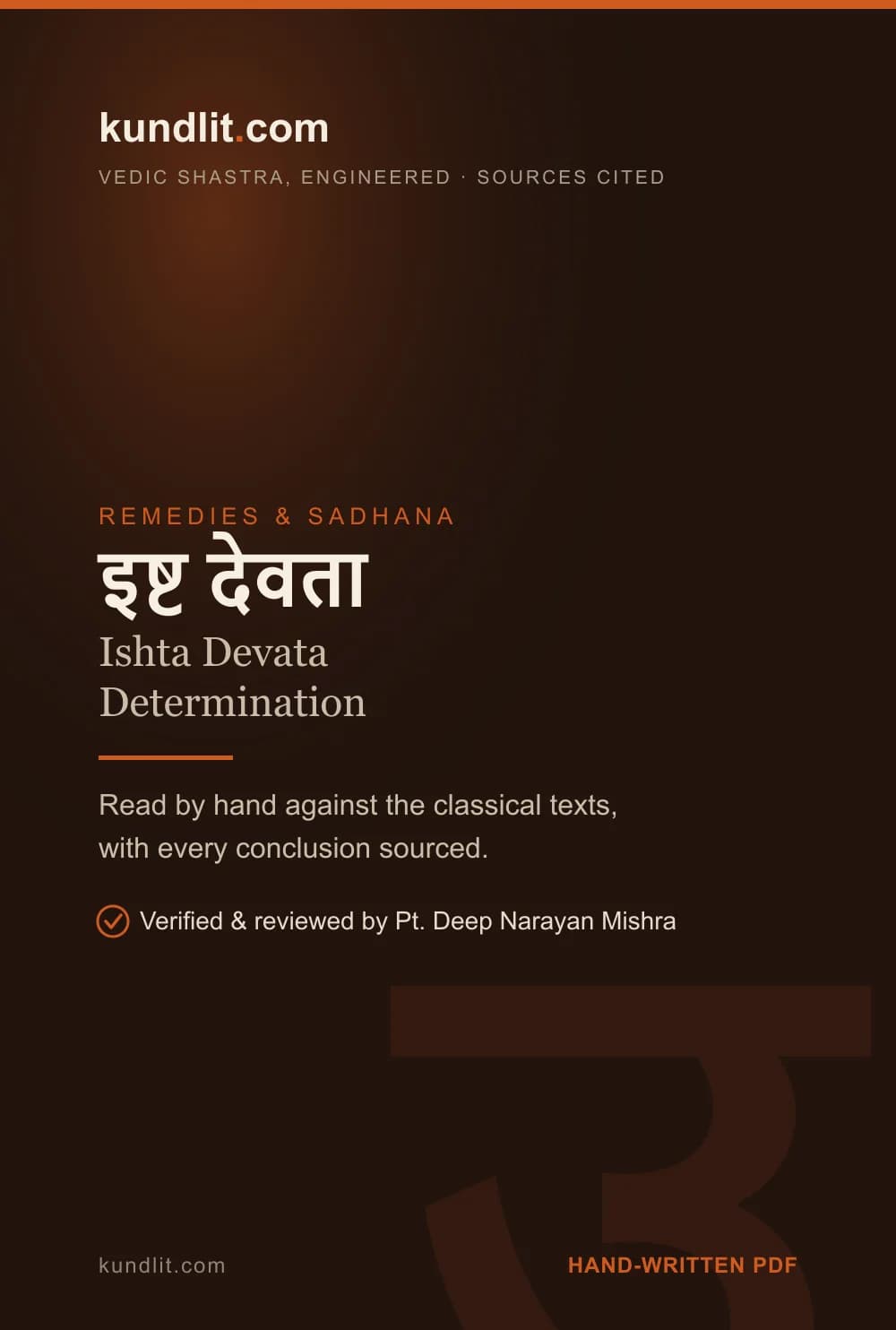
What your report looks like
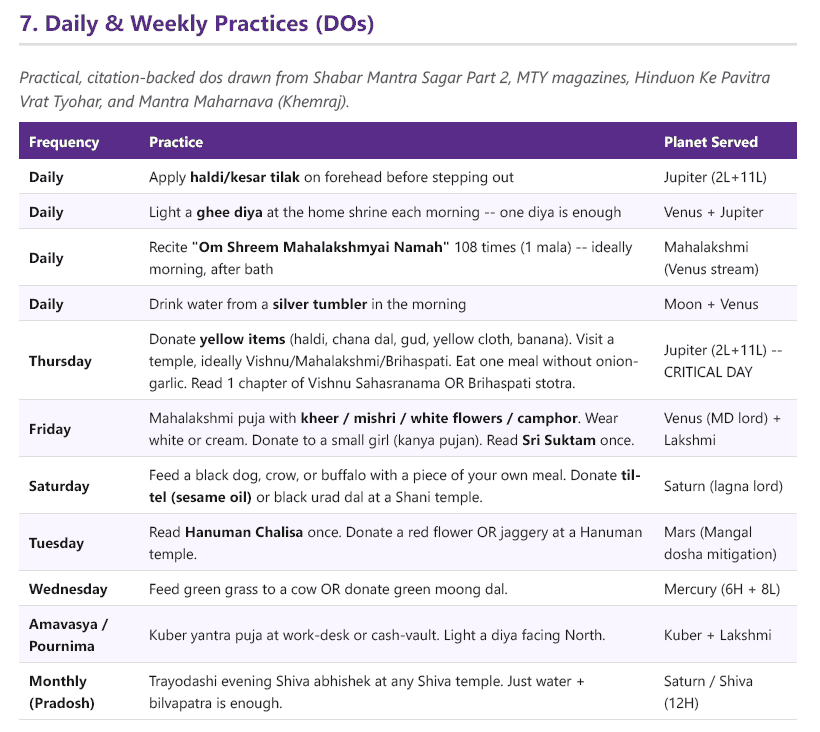
These are real sections from reports we have delivered — names and birth data redacted. Your report is written fresh from your own chart.
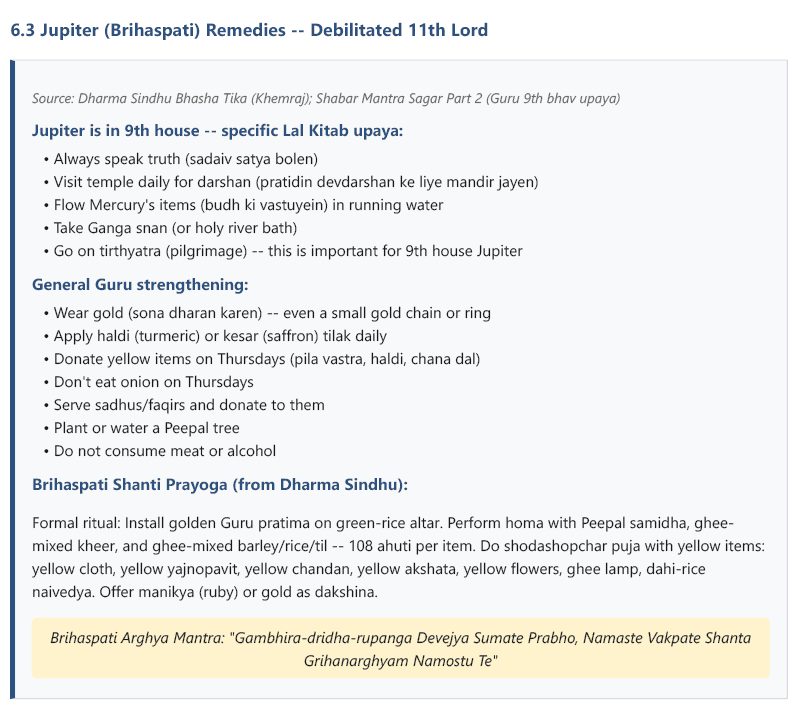
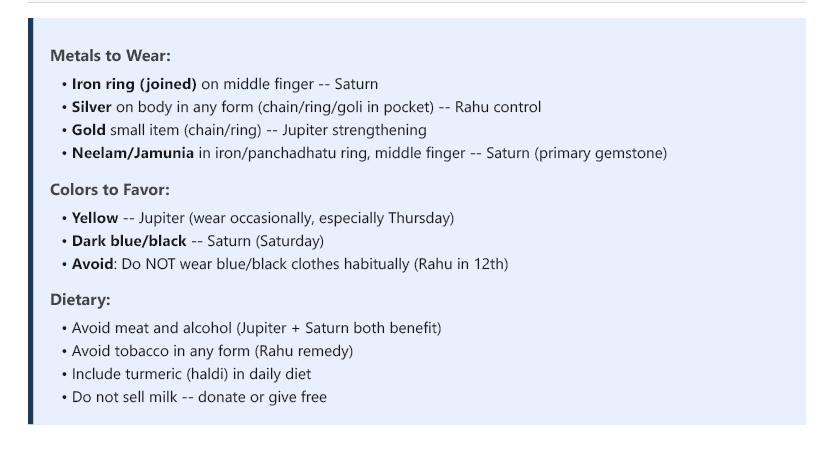
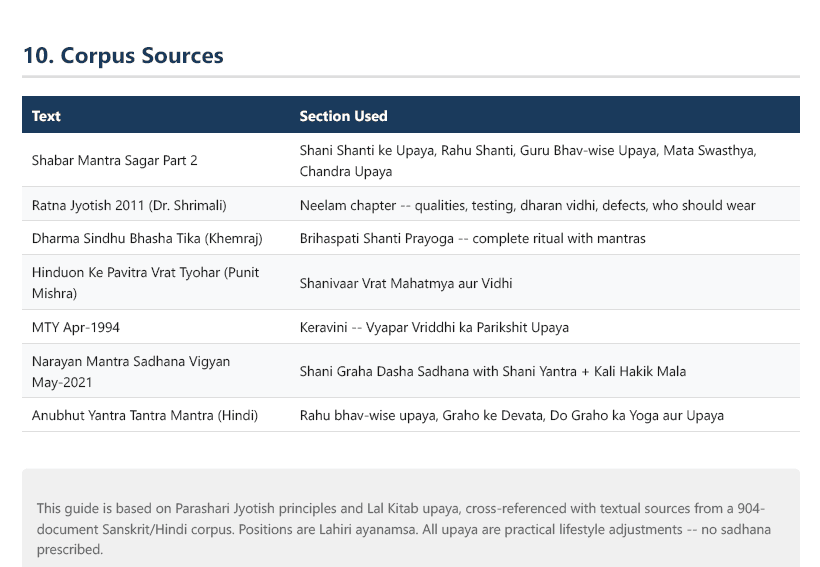
Drawn from the classical corpus
- बृहत्पाराशरहोराशास्त्रBrihat Parashara Hora Shastra — on grahas, bhavas & dashas
- फलदीपिकाPhaladeepika (Mantreswara) — on yogas & results
- सारावलीSaravali (Kalyana Varma) — on planetary effects
The reading
Of all the questions Jyotish can be asked, the question of one's इष्ट देवता — the tutelary form of the Divine that a soul carries across lives — is among the most sacred and the most easily mishandled. This report does not assign you a deity by intuition, popularity, or a seller's preference. It reads the indication from your chart using the classical Jaimini method: the Atmakaraka (the planet at the highest degree, the significator of the soul), its position in the navamsa as the Karakamsa, and above all the 12th house from the Karakamsa — the bhava the tradition holds to reveal the इष्ट, the form one turns to for मोक्ष.
We treat this as a reading, not a verdict handed down. The 12th-from-Karakamsa is interpreted through the planets placed there, the sign and its lord, the planets aspecting it, and corroborating indicators — Atmakaraka in the rashi chart, the 5th house and its lord (पूर्व-पुण्य / past-life devotion), and any unambiguous deity-graha resonances. Where the indicators converge, we say so clearly. Where they are mixed or the chart is silent on a single form, we say that too, and present the supporting deities the chart genuinely allows rather than forcing a single name.
This is a flagship spiritual offering, written with the reverence the subject deserves. It is meant to anchor a practice, not decorate a wall — so alongside the determination we give the deity's मूल mantra and a grounded outline of upasana you can actually begin. An Ishta is not a brand; it is a relationship. We aim only to point you accurately toward the door; walking through it is yours, ideally under a living guru.
What you'll actually uncover
Read against the classics
- The Atmakaraka is taken as the planet at the highest degree — the soul-significator — and then carried into the navamsa as the Karakamsa, following the canonical Jaimini method rather than intuition. [Jaimini Upadesha Sutras]
- The Ishta is read from the 12th house from the Karakamsa — through its occupants, sign, lord and aspects — which is the bhava the tradition holds to reveal the form one turns to for moksha. [Jaimini Upadesha Sutras]
- Where the indicators converge the deity is named clearly; where they are mixed the chart's genuine circle of supporting forms is presented honestly rather than forcing a single name. [Jaimini Upadesha Sutras]
What's included
Your Atmakaraka and what it signifies
Identification of your आत्मकारक — the planet at the highest degree in your chart — with an honest reading of what it says about the soul's core desire, its unfinished theme, and the temperament it brings into this life. This is the seed from which the Ishta reading grows, so we explain it fully before building on it.
Karakamsa reading
The sign your Atmakaraka occupies in the navamsa — the कारकांश — read as the lagna of the soul. We interpret its nature, its lord, and the planets tenanting and aspecting it, since this is the frame within which the 12th-from indication is judged.
The indicated Ishta Devata with classical reasoning
The heart of the report: the deity (or, honestly, the small set of deities) indicated by the 12th house from the Karakamsa in navamsa — read through its occupants, sign, lord, and aspects, cross-checked against the rashi-chart Atmakaraka and the 5th-house पूर्व-पुण्य axis. Every step of the reasoning is shown, with the classical graha-to-deity correspondences cited. Where two indicators disagree, we name the tension rather than paper over it.
The deity's mantra and basic upasana
The deity's मूल/bija mantra with correct pronunciation notes, plus a grounded outline of upasana: a clean seat (आसन), direction, a simple dhyana of the form, an entry-level japa count to settle into, and the spirit in which to approach. This is enough to begin sincerely; depth comes with a guru. Pair the practice with a full Mantra Sadhana plan for a complete daily structure.
How this anchors your spiritual practice
Practical guidance on placing the Ishta at the centre of whatever sadhana you already do — how the इष्ट relates to family/kula deities, to a guru-mantra, and to other worship — so the determination becomes the steady centre of practice rather than one more thing on the altar.
Alternative / supporting deities
The supporting forms the chart legitimately allows — often the Atmakaraka's own rashi-chart deity, a 5th-lord resonance, or a closely-aspecting graha's form — presented as a coherent circle around the central Ishta, not as hedging. If the chart is genuinely silent on a single form, this is where we say so and explain what is indicated.
Two follow-up questions
After you receive the report, you may ask two follow-up questions by message or email, and we will answer them to clarify anything in your reading.
At a glance
Best suited for
- Sadhakas who feel drawn to spiritual practice but are unsure which form of the Divine is theirs
- Those who have a guru-given mantra and want to understand the chart-level basis that supports it
- People standing at the start of a serious upasana and wanting to begin with the right deity
- Devotees who worship many forms and seek the one the chart marks as the soul's anchor
- Anyone who wants the determination done by classical method, with the reasoning shown, not asserted
How it works
- You place the order and complete the intake; we confirm the birth data and flag any time uncertainty, since the navamsa is sensitive to it.
- We compute the Atmakaraka, cast the navamsa, locate the Karakamsa and the 12th-from-Karakamsa, and gather corroborating indicators.
- We determine the indicated Ishta and supporting deities, draft the mantra and upasana guidance, and review the whole reading by hand against the classical sources.
- PDF delivered to your email within 4-7 days.
What we'll ask you
- What is the aim of your practice right now? (optional)
- Which deities or forms are you currently drawn to or worshipping, including any family/kula देवता? (optional)
- Do you already have a guru-given mantra or diksha? (optional)
- How confident are you in your exact birth time? (optional)
Frequently asked
- Is the Ishta Devata you find the only deity I'm allowed to worship?
- Not at all. The इष्ट is the soul's central anchor, not a restriction. You may continue family, guru, and other worship freely; the Ishta simply becomes the steady centre. We also list supporting deities the chart allows.
- I already have a guru-given mantra. Will this contradict it?
- A guru-mantra always takes precedence over any chart reading. Far more often, this report explains the chart-level basis that supports your guru's guidance. If you tell us you have diksha, we frame the reading around it rather than against it.
- What if my chart doesn't clearly point to one deity?
- Then we say so plainly. We present the small circle of forms the indicators genuinely allow, with reasoning, instead of forcing a single name to seem more decisive.
- What's not included?
- This is a chart-based indication and a devotional aid, not a religious initiation. It does not replace, override, or substitute for diksha from a living guru — where you have a guru-mantra, that takes precedence.
- We do not sell idols, malas, or any item; any object referenced is an independent suggestion to source from a trusted seller.
- We make no promise of visions, siddhis, or specific spiritual results — the relationship with the देवता is yours to cultivate.
- Where the chart does not point to a single clear form, we present the indicated circle of deities honestly rather than inventing certainty.
Your data
- HTTPS in transit; passwords stored as one-way hashes; payment data never touches our servers.
- Payments are processed by Razorpay (India) and Stripe (international); card details never reach our servers.
- GST-compliant tax invoice emailed after payment.
Related readings
A registered business: DATCRAZY LLP · GSTIN 22AASFD4221E1ZU · 105, MM Silver Plaza, G.E. Road, Raipur, Chhattisgarh - 492001